Fleet electrification in Orange County is moving from pilot to basic practice. Shipment vans, sales sedans, security patrol systems, shuttle, even light-duty service trucks are switching to electric to cut fuel costs and fulfill business sustainability targets. The distinction in between a smooth rollout and an unpleasant one frequently comes down to electrical planning and how well the charging system fits real fleet habits. After years of designing and installing systems across the county, I have actually found out that the building's electrical backbone, the utility meter, and the operating schedule matter just as much as the trademark name on the charger.
What fleet charging really looks like on the ground
Most regional fleets do not need a sea of fast battery chargers. A delivery operation in Anaheim that parks 18 vans from 6 p.m. To 6 a.m. Can typically satisfy its everyday energy with Level 2 charging at 208 to 240 volts, provided you size circuits and handle load wisely. A medical facility shuttle service in Irvine with midday downtime might run a mixed model, topping off at lunch and ending up over night. A courier firm that turns vehicles throughout the day with brief dwell times might certainly need DC fast charging, however even there, a handful of DC ports paired with well-managed Level 2 stations often beats an all-DC footprint on cost and reliability.
The typical thread is dwell time. If vehicles sleep on-site, Level 2 tends to win. If cars cycle through with minimal idle durations, DC charging makes its keep, however only once the electric service and energy expenses pencil out.
Local context that shapes style in Orange County
Orange County's structure stock covers mid-century tilt-ups, brand-new Class A campuses, and everything in between. Numerous homes feed from Southern California Edison, while parts of Anaheim run on Anaheim Public Utilities. That divided affects timelines, transformer availability, and tariff alternatives. Cities within the county stick to the California Electrical Code and regional changes, so plan checks look closely at load estimations, EV energy management systems, and accessibility. Parking lots are typically tight, that makes cable television reach, bollard placement, and ADA routes nontrivial.
CALGreen and the California Building regulations need EV capable or EV prepared areas for many brand-new projects and significant remodellings. For existing centers, the code course usually runs through Article 220 load computations, Article 625 for EV supply devices, and acceptance of EV Energy Management Systems that can assign power dynamically. Getting this right on paper saves weeks in permitting.
Level 2 versus DC fast charging for fleets
Both categories belong. The trick is fitting them to the task cycle and the structure's electrical capability. Level 2 a/c stations usually deliver 7.7 to 19.2 kW per port. In useful terms, that is roughly 25 to 60 miles of variety per hour on common light-duty fleet lorries. DC quickly charging ranges widely, from 50 kW up past 350 kW, and can add numerous miles in an hour, however it drives higher setup expenses and often activates need charges.
A basic method to compare them for a fleet depot:
- Power and dwell: Level 2 fits lorries parked for 6 to 12 hours, DC matches short-turn operations or larger battery packs that need fast recovery. Infrastructure: Level 2 can often ride on existing panels with wise load sharing, while DC generally needs 480 volt service and sometimes a brand-new transformer. Cost profile: Level 2 has lower capex and generally avoids steep need charges, DC can bring higher energy expenses unless thoroughly arranged or paired with storage. Maintenance and uptime: Level 2 hardware is simpler and much easier to keep; DC has more components and take advantage of service contracts and remote monitoring. Site effect: Level 2 uses smaller sized channels and shallower trenching; DC foundations, equipment pads, and protective bollards take more space and coordination.
Electrical capability is the genuine bottleneck
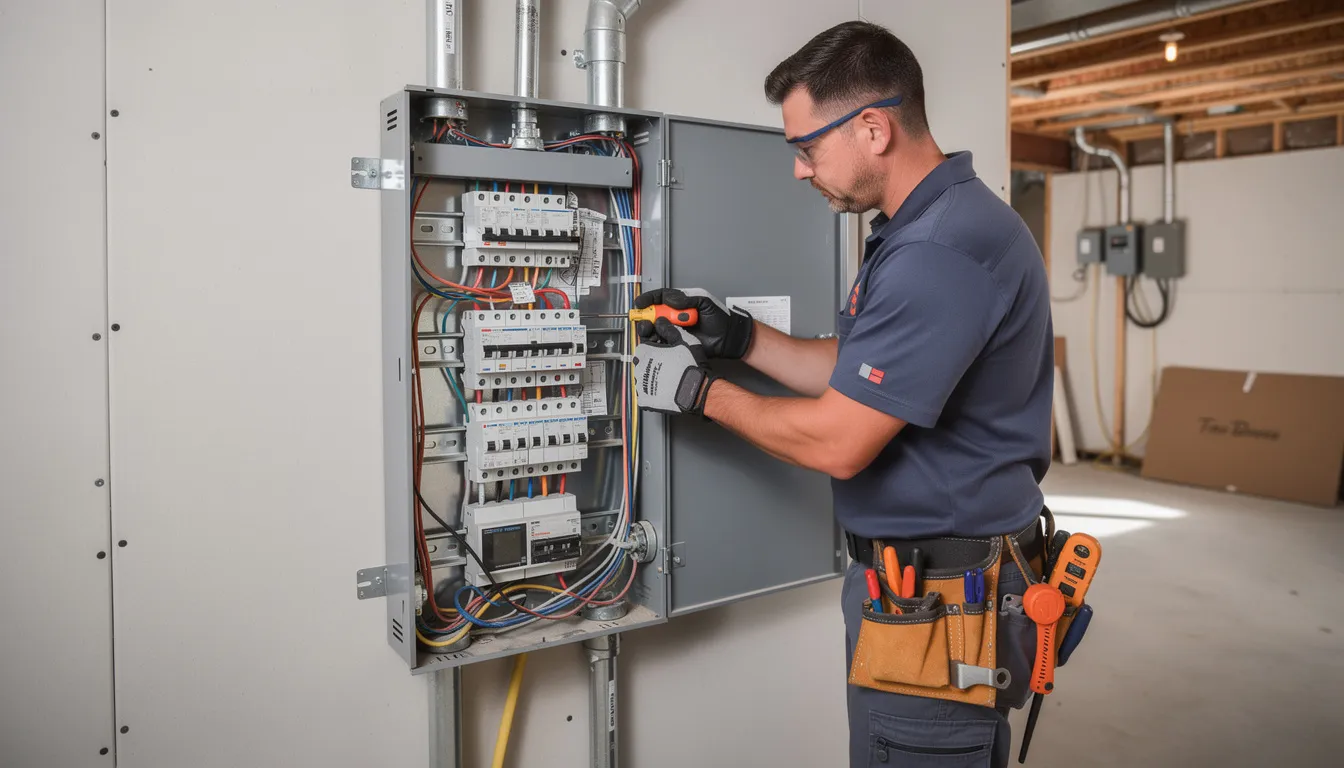
Every reliable project begins with a difficult look at the existing service. Lots of two-story offices in Santa Ana or Tustin carry 400 to 800 amps at 208/120 volt three-phase. That sounds like a lot up until you stack heating and cooling, lighting, commercial devices, and then try to add ten EV ports at 40 amps each. Smart load management helps greatly. Modern Level 2 systems can assign a 100 amp feeder across four, six, or 8 ports based upon who is plugged in and how much charge they need before early morning dispatch. That technique turns a constrained panel into a workable depot without immediate energy upgrades.
For websites that truly need more capability, the series looks like this: verify spare capability at the primary switchboard, consider an electrical panel upgrade Orange County inspectors will accept, study whether a panel replacement Orange County service is cleaner than parallel gear, then collaborate with the energy if a transformer change ends up being essential. The distinction between a 12 week and a 9 month schedule is frequently whether you can avoid that transformer.
Load calculations, variety, and EV energy management
Design ought to utilize determined structure loads when possible, not simply nameplate amounts. An one month data logger on the primary provides you the real kW peaks and exposes patterns, like a repeating 7 a.m. a/c spike. With that data, you can set maximum site thresholds for charging and utilize an EV Energy Management System to remain below them. Codes now acknowledge these systems, offered they keep track of each circuit and shed or throttle load predictably. The result is a compliant, right-sized electrical installation instead of an overbuilt one.
One caution: diversity presumptions should match truth. If your fleet dispatch in some cases returns all vehicles early on hot days, your design needs headroom for that. We typically model worst-case windows, not just typical days, and confirm the utility tariff won't penalize a one-off event.
Hardware choice that fits fleet behavior
The badge on the pedestal matters less than network reliability, OCPP compatibility, and chauffeur workflow. Fleet operations benefit from RFID or app authentication for drivers, role-based gain access to control so the general public can not plug in at reserved depots, and API combinations that connect charger data to telematics. Fault-tolerant styles utilize dual-port Level 2 pedestals powered by separate breakers when feasible, so a single tripped circuit does not strand 2 cars. For DC, swappable power modules reduce downtime and lower service costs.
Cable management is not cosmetic. In busy lots, retractors or overhead booms avoid journey risks and extend cable television life. An improperly routed 25 foot DC cable draped across a drive lane will not last long.
Construction realities: trenching, security, and weather
Most Orange County sites cut asphalt to run channel from a building to the parking lot. Trench depth, backfill, and concrete pads are simple but frequently encounter watering lines or unidentified utilities. As-builts are frequently incorrect or missing on older homes. An utility locate and a couple of exploratory pits at the start can conserve thousands. Protective bollards at stations and at gear pads are not optional, particularly near delivery lanes. We likewise spec wheel stops to keep bumpers off pedestals and keep ADA clearances intact.
While our climate is forgiving, chargers still see sun, salt air near the coast, and the periodic storm. NEMA 3R enclosures are common, however we choose extra gasketing and rust resistance within a couple of miles of the ocean. A little canopy can pay for itself by extending equipment life and enhancing motorist comfort throughout over night plug-ins.
Accessibility and striping that pass inspection
California's accessibility requirements for EV spaces are specific. Anticipate a certain count of available EV areas based upon overall stations set up, with van-accessible widths, loading aisles, and paths to entrances. Signs height, pavement markings, and surface slopes get checked in the field. It is far much easier to information this on the plan set and consist of the striping scope in the electrical authorization bundle than to repair it after assessment. We usually walk the website with center supervisors to choose areas that minimize slope corrections and maximize cable television reach.
Utility coordination and tariffs
Southern California Edison offers time-of-use tariffs that can prefer off-peak charging. Specific rate names and eligibility evolve, but the pattern holds: energy is less expensive late during the night and more expensive in the late afternoon and early night. Need charges can swing total expense of ownership. If your fleet mainly charges from 9 p.m. To 5 a.m., that expense curve operates in your favor. If you need to fast charge at 4 p.m., prepare for it financially and consider on-site storage to clip the peak.
Anaheim Public Utilities runs its own programs and timelines. They have been helpful of fleet electrification, however interconnection reviews and meter work follow their internal line. Early engagement with whichever utility serves your address speeds up the path. A regional electrician Orange County teams trust will understand who to call and what paperwork lands best with each utility.
Software, controls, and the value of data
Good fleet charging software application does 3 jobs. Initially, it optimizes the kWh you can deliver with the electrical capability you have. Second, it aligns charging with the most inexpensive tariff windows while safeguarding lorry readiness. Third, it produces clear reports for operations and financing. We commonly integrate with telematics platforms so dispatch understands which automobiles are charge-complete and upkeep can find battery health patterns. Open protocols like OCPP matter since they keep you from being stuck to one vendor if your needs change.
For motorist experience, keep it basic. Clear labeling at each port, a consistent RFID workflow, and status lights visible from the cab lower mistakes. If agreement drivers or third parties share the lot, geofenced access rules and time-of-day restrictions stop freeloading without producing friction for your team.
A quick preparedness list for site owners
- Verify your utility service and main switchboard ratings, then run genuine load monitoring if possible. Map parking that matches fleet dwell patterns, consisting of at least one accessible EV area place that pencils out. Choose hardware with proven uptime, OCPP support, and cable television management suited to your lot. Plan trench paths, protective bollards, and any panel upgrades before you lock hardware counts. Align software application guidelines with your tariff windows and dispatch times, then test with a small pilot.
Budgeting, rewards, and the total cost picture
Installation expenses in Orange County differ widely. A compact setup of 4 Level 2 ports near an electrical space may land in the mid five figures. A 12 port task across a big lot with long trench runs can cross six figures. DC fast charging normally starts higher due to equipment, pads, and service upgrades. Permitting, design, and examination are meaningful line products, however they are predictable if you stage the work well.
On incentives, options shift year to year. Southern California Edison has actually supported make-ready infrastructure for commercial sites in current programs. Anaheim Public Utilities has provided refunds and technical assistance for EV charging on specific consumer classes. County and state offerings come and go. The safest method is to check present energy and state program portals before purchase orders are signed, and to bake conservative presumptions into the pro forma. Refunds are a bonus, not a dependency.
Fuel cost savings should have a sensible baseline. We frequently see fleets cut energy expense per mile by 40 to 70 percent compared to gasoline, depending upon tariff and charging habits. Upkeep cost savings are genuine but vary with responsibility cycle. Brake wear drops with regenerative braking, oil changes vanish, but tires and suspension still take the exact same whipping from curbs and cargo.
Safety, assessments, and long-term reliability
An expert Orange County electrical contractor will deal with EV stations like any other vital equipment. That implies appropriate fault existing studies when gear changes, selective coordination for breakers, surge defense on EV circuits, and GFCI where needed. We spec bollards and wheel stops, label disconnects, and find gear with clear working space so maintenance is safe and examinations go efficiently. Remote tracking is not fluff. If a port faults at 2 a.m., an alert can prompt a remote reboot or an exact same day electrician Orange County dispatch before your 6 a.m. Rollout.
We also suggest a medical examination at 6 months and yearly afterwards. Thermal scans catch loose lugs. Firmware updates avoid annoyance journeys. Cable television ends use faster than you think in gritty lots. A small maintenance spending plan secures your uptime.
Phased rollouts beat big-bang builds
Starting with a pilot of 4 to eight Level 2 ports allows you to confirm motorist behavior, software application settings, and tariff efficiency. You learn which spaces ice up, which cables take abuse, and whether you require signs or cones during peak return hours. We often rough-in channel for the complete build, but only set a subset of pedestals. That way growth is quick, and early lessons inform the last layout.
When DC quickly charging is in the mix, piloting a couple of dispensers with scalable power modules keeps options open. Some fleets find that a single 120 kW system used tactically suffices when paired with robust overnight Level 2.
Two short case snapshots
A Costa Mesa logistics firm with 22 light vans parked from 7 p.m. To 5 a.m. Installed ten dual-port Level 2 pedestals at 40 amps each on a managed 200 amp feeder. No panel replacement was needed. The EV energy management kept overall structure draw under a site limitation to avoid need charges. Average overnight energy provided per van was 32 kWh, with every van leaving full by 5 a.m. After three months, they broadened channel stubs and added 4 more ports without new trenching.
A corporate campus in Irvine piloted one 150 kW DC quick battery charger for security SUVs that roam all day. Data showed most top-offs occurred late night, so they set a software application window that restricted DC sessions throughout the late afternoon peak. Need charges dropped, and they prevented a pricey transformer upgrade by topping coincident load with the structure's cooled water plant start sequence.
How a local electrical expert helps beyond the install
An experienced Orange County electrician does more than pull wire. Anticipate aid with utility applications, load studies, ADA detailing, meter separation choices, and phasing that preserves parking during construction. On older structures, whole home rewiring Orange County style thinking, used to industrial gear, can discover brittle conductors, deterioration, or unlabeled subpanels that would otherwise bite you during assessment. For home supervisors who likewise supervise domestic neighborhoods, having a residential electrician Orange County partner who understands HOA constraints simplifies resident charging alongside fleet needs.
When emergencies happen, such as a lorry clipping a pedestal or a tripped primary before dispatch, having a 24 hr electrical contractor Orange County contact who understands your site decreases downtime. The very best electrical expert Orange County teams carry typical replacement parts, keep as-builts on file, and can speak to your software supplier to clear faults without finger-pointing.
Common pitfalls to avoid
Permitting hold-ups typically trace back to incomplete plan sets. Offer one-line diagrams, load calcs, site plans with ADA information, and producer sheets up front. Another trap is underestimating trench restoration. Asphalt patching and striping can eclipse the electrical scope if not recorded in quotes. Lastly, do not connect your entire operation to a single network's proprietary features if you can use open requirements. OCPP provides you optionality years down the road.
We also see spending plans skip small but essential items like bollards, wheel stops, and signs. Those save devices, minimize trips, and speed evaluations. If you welcome public access at any hour, lighting setup Orange County grade lighting near stations keeps chauffeurs safe and cams helpful. Recessed lighting does little outside; think pole lights, cutoff components, and glare control for nearby neighbors.
Where station placement satisfies operations
Walk the site at the times your drivers return and leave. Observe traffic patterns. Prevent positioning pedestals where reversing trucks will shear them off. Put a minimum of one accessible EV area near a certified route, not the steepest area of the lot. Where forklift or cart traffic crosses, consider steel bollards with sleeves, not plastic. For seaside websites, spec stainless hardware. For inland hot lots, consider shade sails that likewise keep batteries cooler, improving charge rates.
Cable length matters. A 25 foot cable television may not reach charge ports on both the left back and front fender throughout your fleet. Blended makes and designs require compromises. If all vehicles are standardized, design for that port place and save cash by reducing cable televisions and tightening up pedestals to curbs.
Integrating with building upgrades
EV jobs often dovetail with other electrical enhancements. An electrical panel upgrade Orange County inspectors approve can include capacity for future tenant improvements. Smart home circuitry Orange County is generally a residential term, but the very same low voltage circuitry Orange County techniques apply when you run information for chargers, cams, and gain access to control back to an IDF. If you plan generator installation Orange County for strength, coordinate transfer switches and ensure EV loads are shed throughout outages unless you purposefully support emergency situation charging. Outdoor lighting Orange County design around the charging area should be evaluated against glare, cam field of visions, and power availability in the very same trench.
If you also handle interior remodellings, enjoy that outlet setup Orange County electrical experts perform in occupant suites does not eat up circuit capacity you were counting on for battery chargers. Ceiling fan setup and other small loads are unimportant alone, however alter the math if twenty suites add them after your load research study. Keep a change log and revisit calcs before you include more ports.
Planning for growth and technology shifts
Battery pack sizes are trending up. Faster charge rates are creeping into the mainstream. Software keeps getting smarter. The constant is conduit. Oversize it where you can. Set pull strings for future circuits. Location gear pads with space for another section. Use networks that speak open procedures. And document everything. A tidy set of as-builts with circuit IDs and network diagrams will save days on your next phase.

For some depots, https://remingtonbxze126.brightsora.com/posts/surge-security-installation-orange-county-safeguard-your-electronics including a small solar carport over charging bays reduces midday load and cuts heat gain on automobiles. Storage can shave peaks, but it makes one of the most sense when you have inescapable afternoon fast charging or weak grid capacity. The economics are website particular. Run the mathematics with your tariff and your genuine duty cycle, not a generic model.

Choosing the best partner
A licensed electrician Orange County provider who has delivered both Level 2 depots and DC quickly charging will safeguard your schedule and spending plan. Look for a top rated electrical expert Orange County services advise for industrial work, with referrals that sound like your operation. Ask how they handle electrical fixing Orange County broad after hours. Learn whether they stock extra parts or can supply same day electrician Orange County action if a critical port decreases. An economical electrician Orange County can still be strenuous on design and safety; cost ought to come from thoughtful scoping and phasing, not corner-cutting.
For multi-use homes, you might require an Orange County electrical contractor comfy with both commercial and domestic code since mixed-use parking brings special difficulties. The best groups fold in electrical examination Orange County requirements from the first illustration, coordinate with strategy checkers, and keep interaction tight with centers and operations throughout construction.
Final thoughts from the field
Every successful fleet charging job in Orange County solves for three things at once: chauffeur preparedness, electrical truth, and overall expense. Start with determined loads, design for your real dwell times, and choose hardware and software that you can deal with for a years. Keep sightlines tidy, cable televisions managed, and ADA information exact. Do not be afraid to start small, show the model, then scale. And keep an experienced commercial electrician Orange County company at the table from the first day. It is much easier, less expensive, and faster to develop it right than to repair it later.